From a BisTrack journey to a photograph on the order.
Convoy doesn't replace your telematics and it doesn't replace BisTrack — it is the layer between them. The journey your dispatcher already built goes out to Samsara as a route, and everything that happens on the road comes back as a stamped arrival, a notified customer, and a filed photograph. Like every Companion, it starts in shadow mode: watching and recording, writing nothing, until you've seen it get a few real deliveries right.
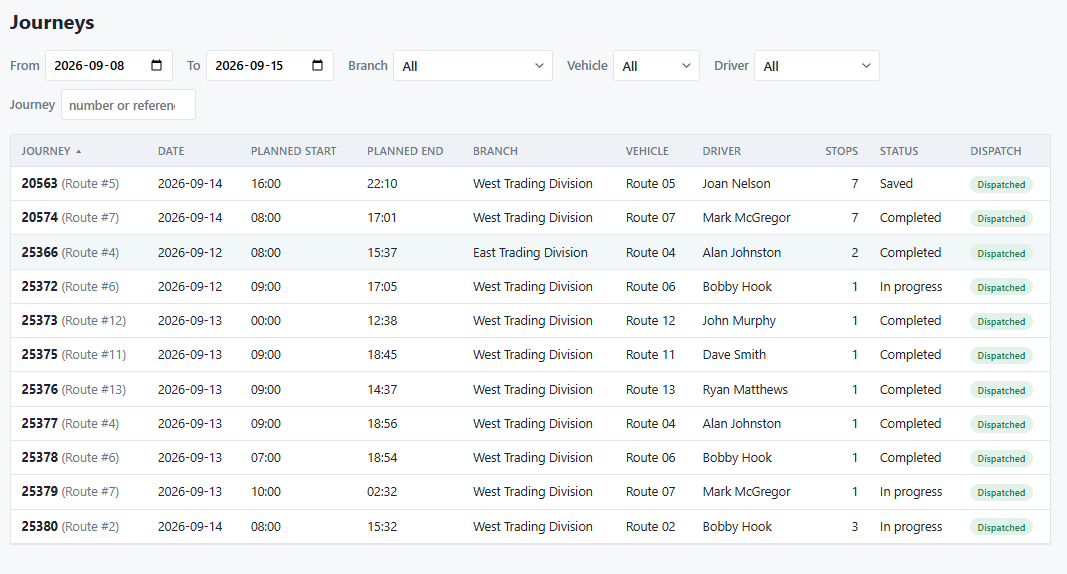
Every load, every branch, one screen.
Convoy reads journeys straight out of BisTrack — the date, the branch, the vehicle, the driver, the stop count and the planned window. Nothing is re-keyed and nothing is kept in a second place.
Each row also carries its dispatch state, so a dispatcher can see at a glance which journeys have reached the telematics provider and which are still sitting. Users only see the branches they're assigned to.
Where the truck is, and which stop it's on.
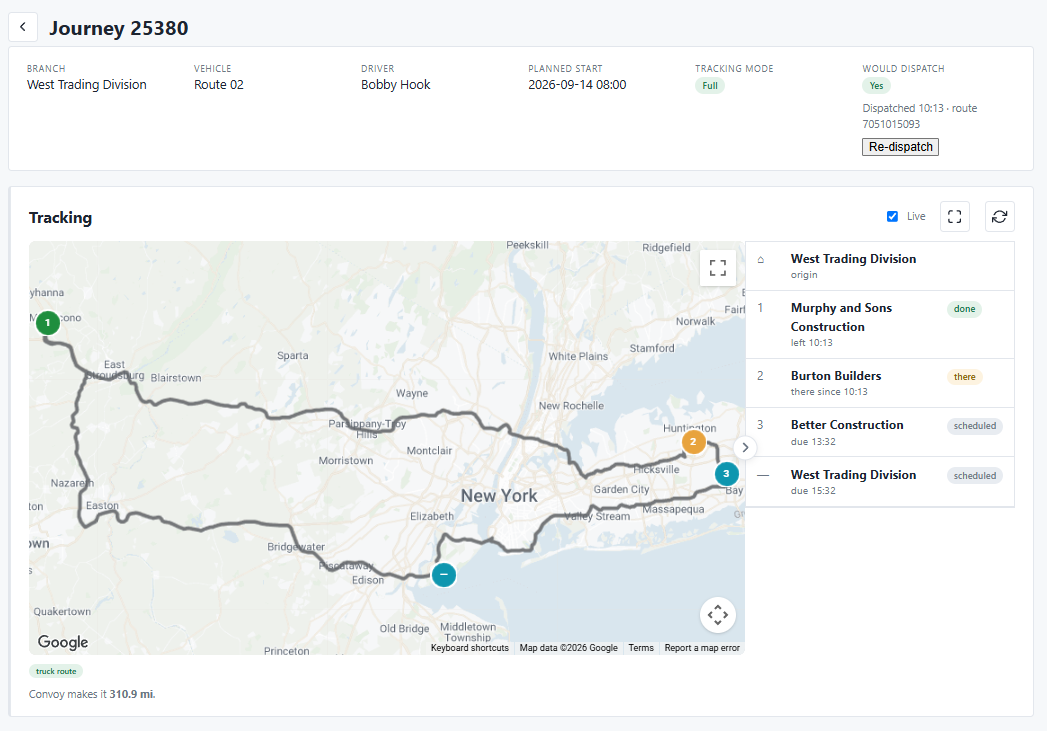
Once a journey is dispatched, Samsara owns the driving and Convoy owns the picture. The map shows the route and the vehicle's live position; the list beside it shows each stop as done, there or scheduled, with the time it actually left and the time it's now due.
Where your vehicle profile carries a height or a weight, Convoy routes with Google's Large Vehicle Routing so the line on the map avoids roads a truck can't legally use. Where it doesn't, the card says so rather than quietly showing you a car route.
Your customer can see it coming.
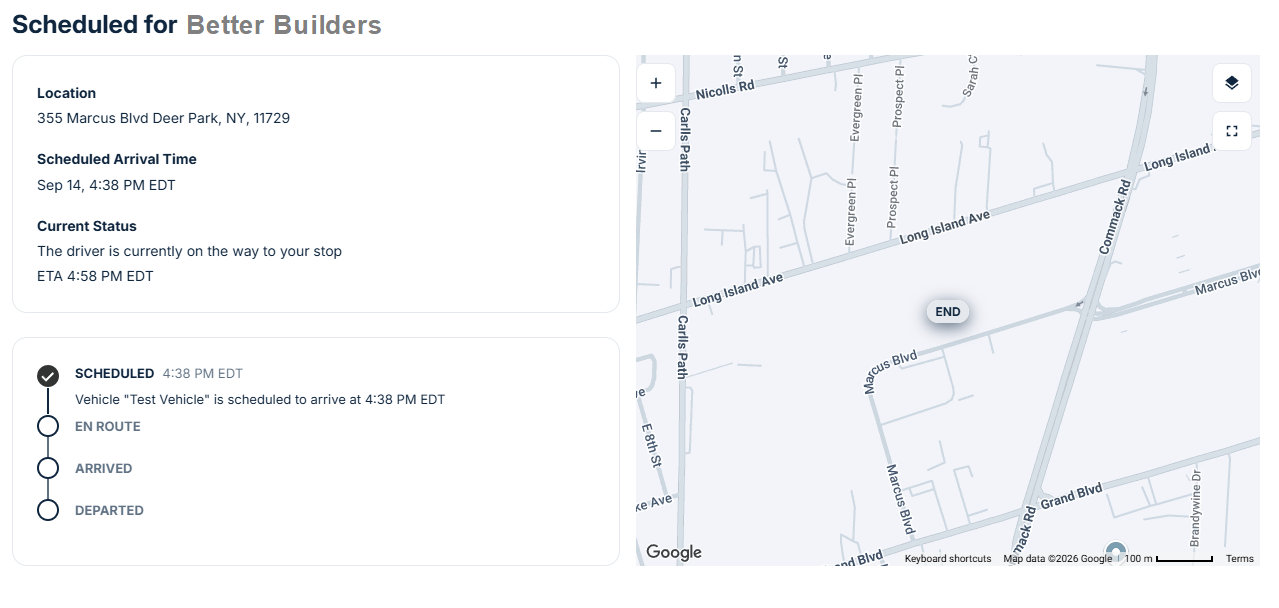
Every stop gets its own tracking page. The customer sees their scheduled window, the driver's current status, a live ETA and a map — and nothing else about your day. No login, no account, no view of anyone else's delivery.
It's the same page from the moment the load is scheduled through to departure, so "where is my order" answers itself.
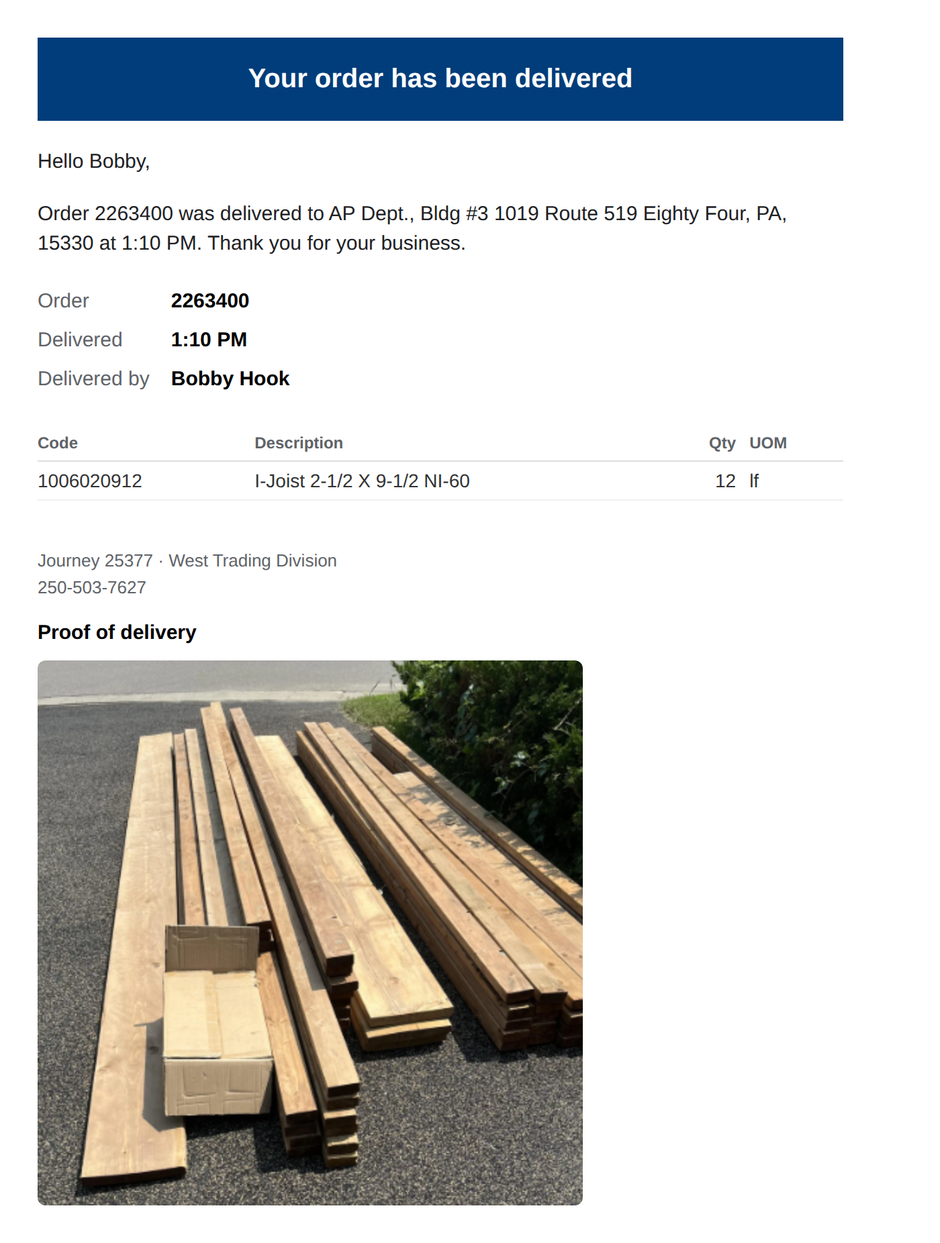
Delivered — here's the photograph.
Notifications are built from your own templates, with tokens for the order, the customer, the journey, the branch, the driver and the tracking link. Send on dispatch, on the way, on arrival, on delivery, or on whichever of those you actually want.
Where the driver photographed the drop, the photograph rides along with the message. A customer who can see their lumber stacked on their own driveway doesn't ring the branch to ask whether it arrived.
The photograph ends up where you'd look for it.
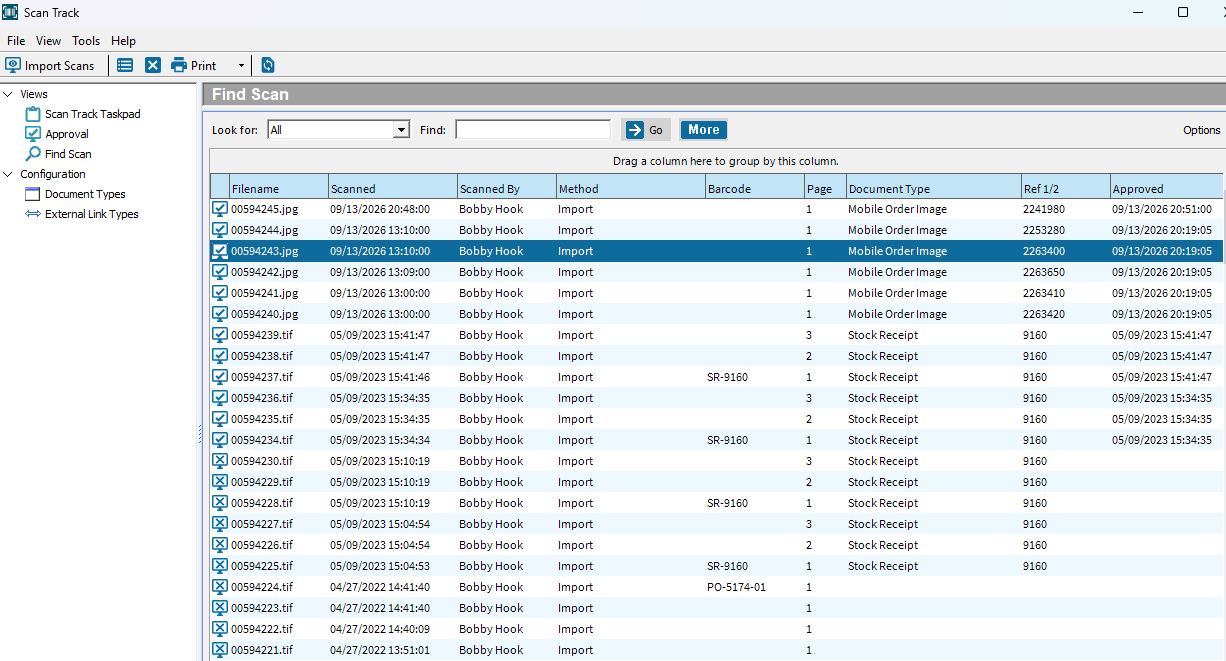
Convoy files each delivery photograph into BisTrack's own document store against the sales order, using BisTrack's own filing procedure — same document types, same folders, same approval, same numbering as anything your staff scans.
So it turns up on the order in BisTrack, next to the delivery note and the stock receipt, for whoever pulls the order up six months later during a dispute. Where the driver's phone recorded coordinates, those are filed with it.