The pipeline your ERP already had, made visible.
Every figure on these screens comes from BisTrack — customers, quotes, orders, invoiced sales, price rules and credit. What Pipeline adds is the part BisTrack was never going to know: who you're chasing, what stage it's at, and what happens next.
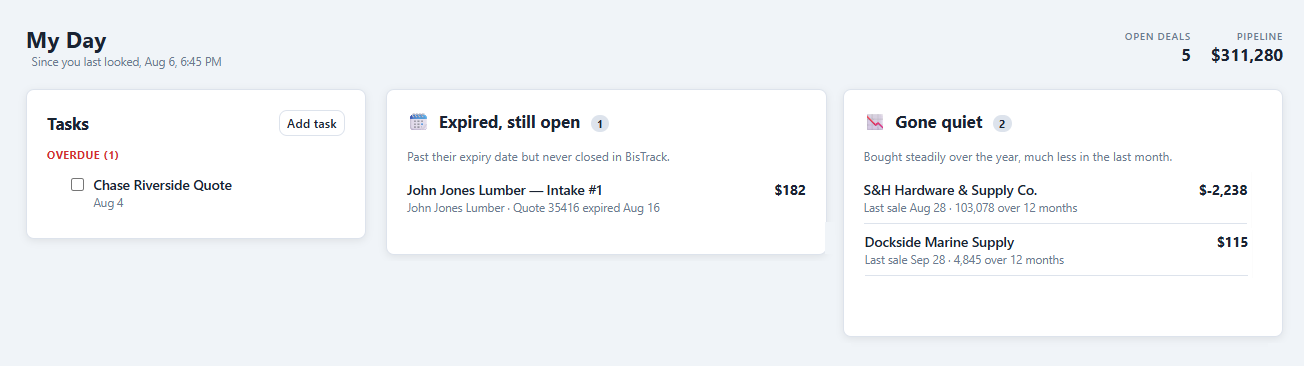
My Day tells you what slipped.
Overdue, today, the next seven days, and what you already closed out — plus a stack of signals worth a look: quotes about to expire, deals that have gone quiet, accounts that have stopped buying. Every row deep-links to the specific deal rather than dropping you on a board to find it.
Ticking a follow-up asks what happened. The note lands on the original activity, so a manager can see the loop was closed without asking.
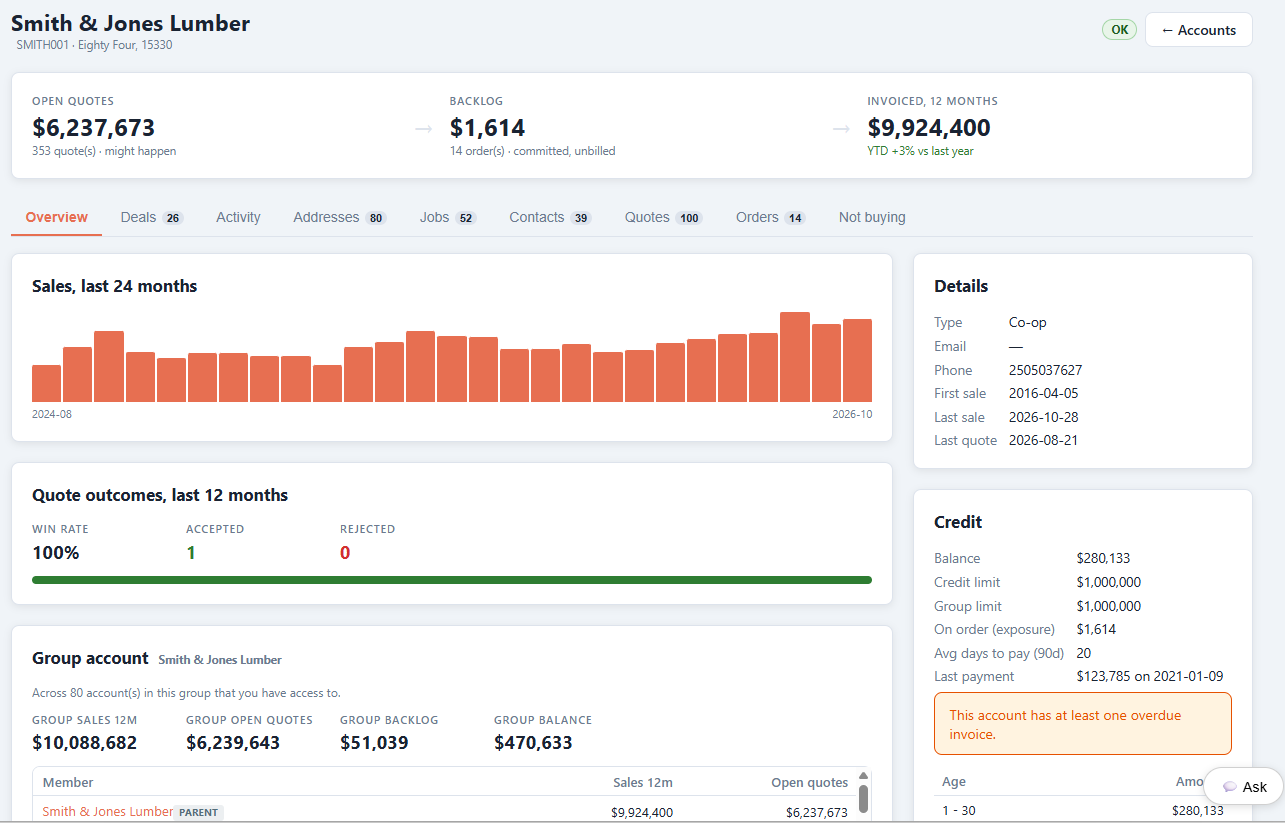
Every account, with the numbers that matter on it.
Accounts are BisTrack customers — Pipeline never duplicates them. What it adds is the roll-up: open quotes, backlog and invoiced sales as three stages of the same revenue, a 24-month sales sparkline, quote win rate, and a 30-day trend coloured against the yearly average so a customer going quiet shows without you doing arithmetic.
Credit, AR ageing and days-to-pay sit behind their own permission, because plenty of dealers don't show reps the AR ledger. The credit status badge doesn't — a rep about to push a large package should know the account is in trouble.
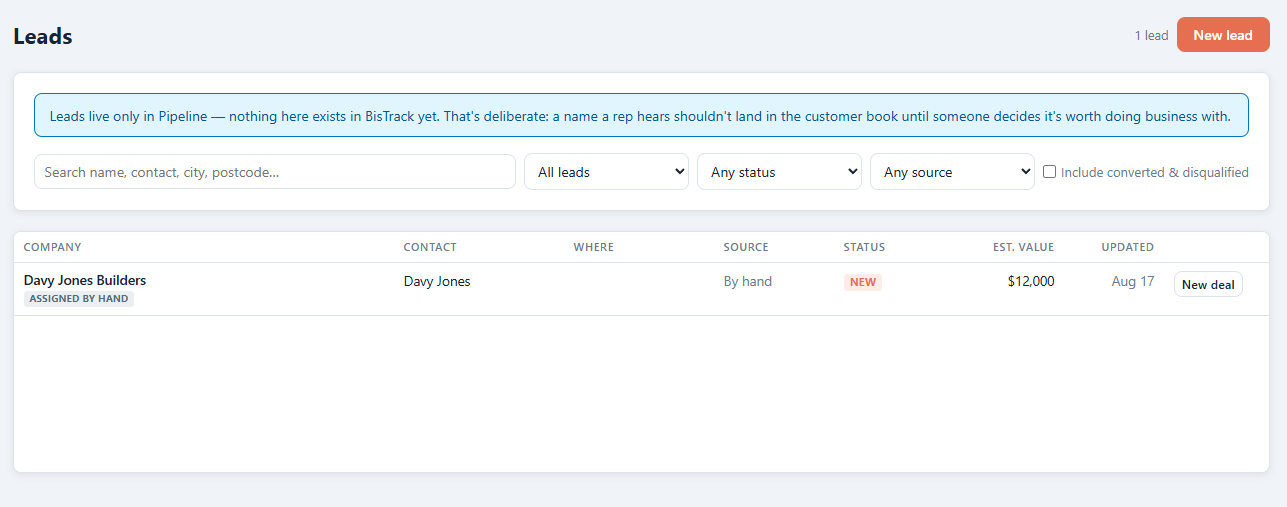
Leads live only in Pipeline. Deliberately.
A name a rep hears shouldn't land in the customer book until someone decides it's worth doing business with. Leads carry the contact, the address, the source and the estimated value, and territory rules decide whose they are.
When one is worth converting, Pipeline checks first whether they're already a customer — splitting one contractor across two accounts divides their history and nothing merges it back. Convert writes a prospect record into BisTrack, deliberately incomplete, so opening the account stays with accounting.
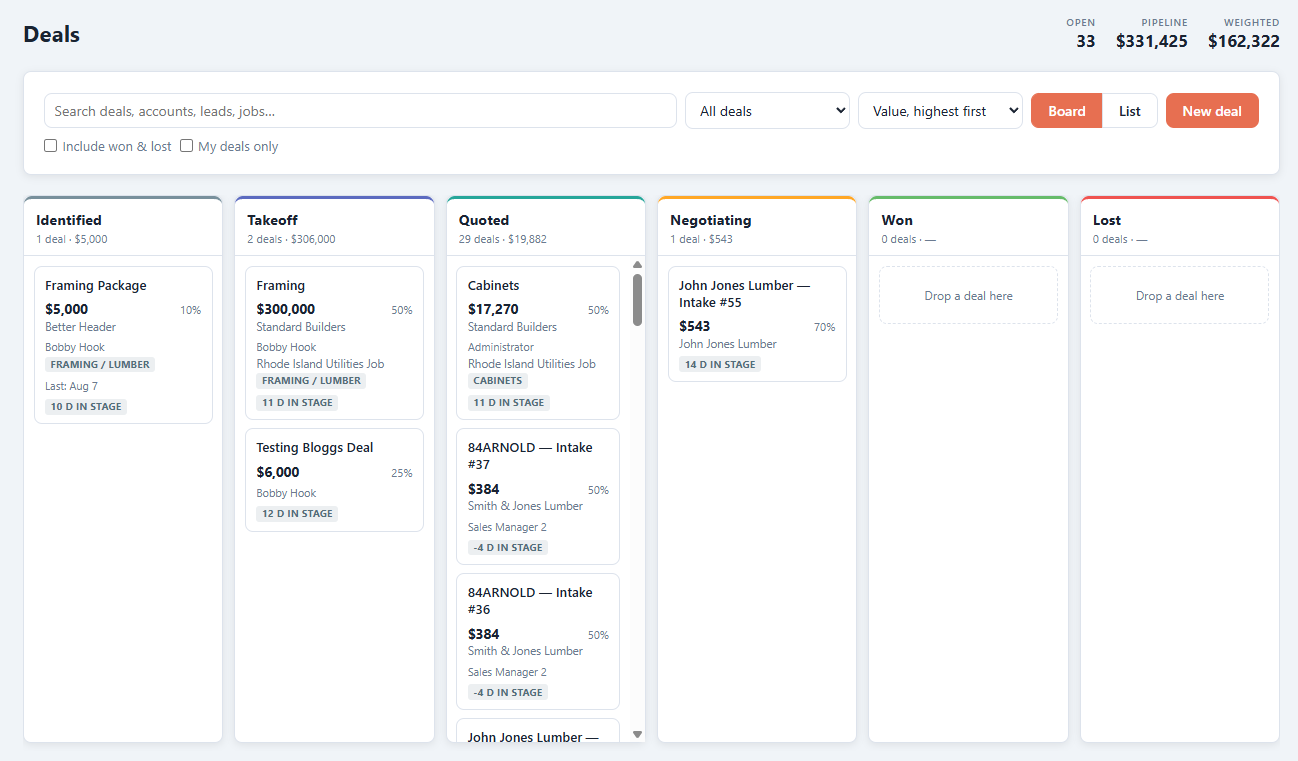
Deals appear by themselves.
Drag a card between stages, or work the list when the backlog is real. Cards show whichever fields your shop cares about, and a deal that hasn't moved for three weeks is flagged as stalled.
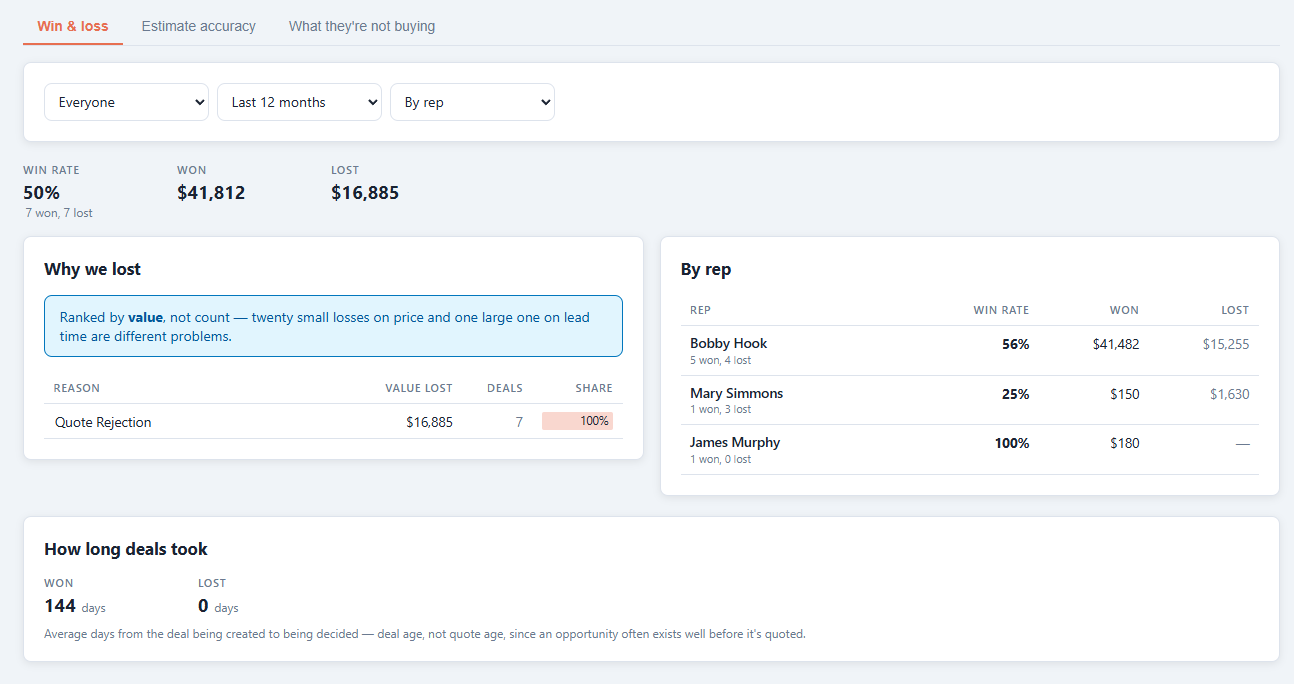
Quote sync is what keeps it honest: a BisTrack quote with no matching deal creates one, an accepted quote marks the deal won using the value of the orders it produced, and a rejected quote marks it lost carrying BisTrack's own rejection reason. Nobody has to remember to update the board.
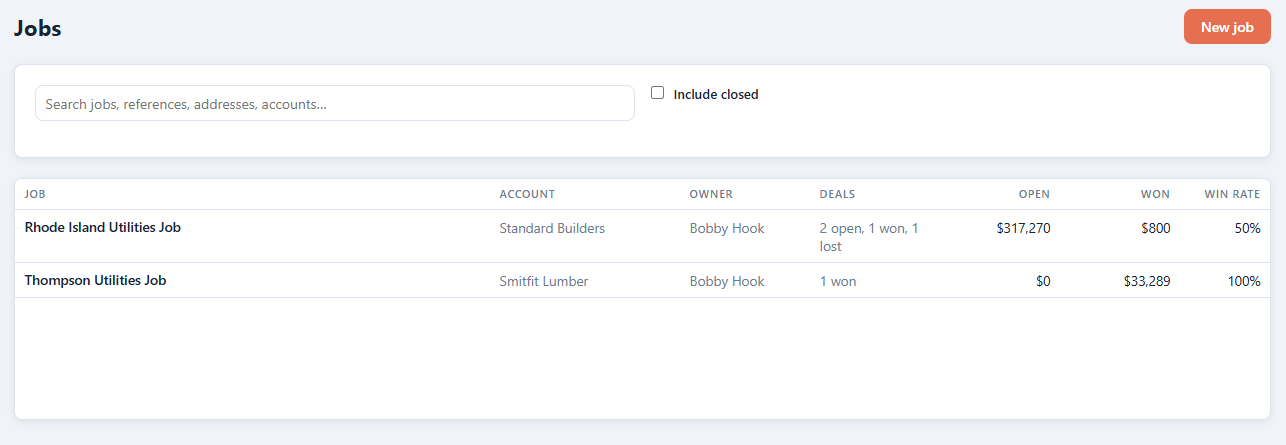
One build, quoted in parts.
A job groups the parts of one build — framing, windows, cabinets — so each is quoted and won on its own. Taking the framing and losing the windows is a normal outcome, not a half-lost job.
Each part carries its own work type, which is what makes "we won 12 of 15 framing jobs last year" a question the reports can answer.
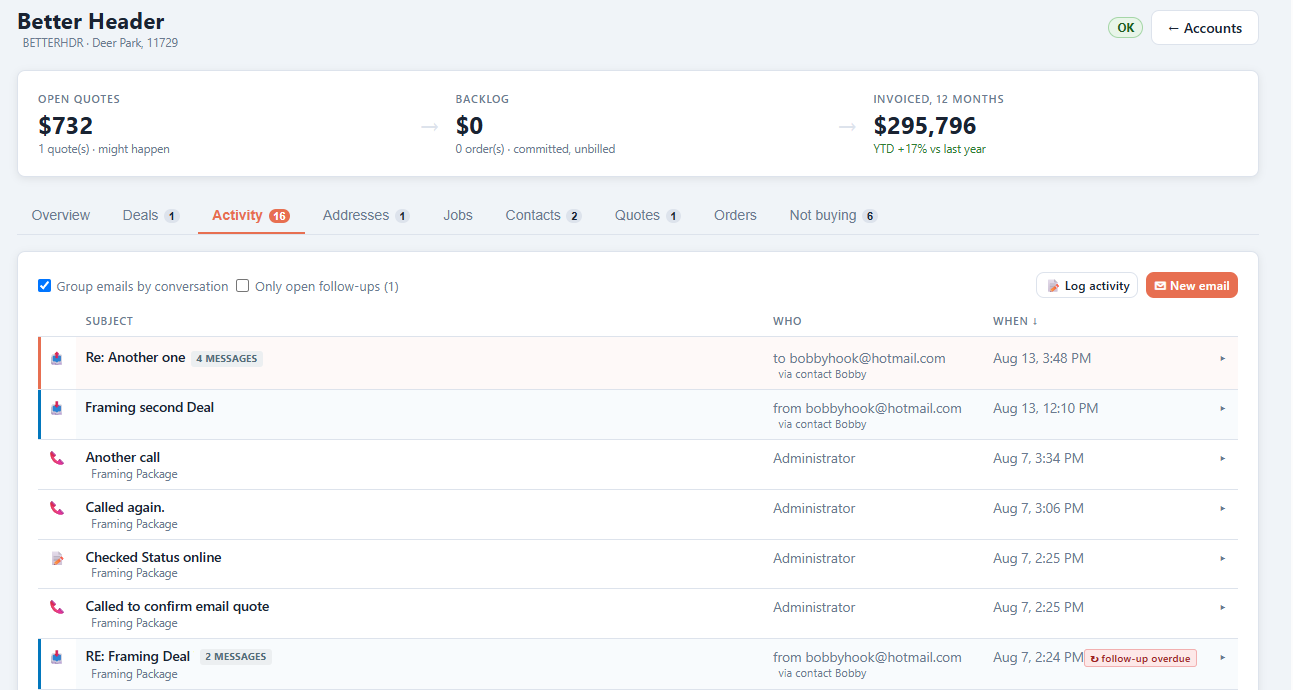
Email lands on the timeline by itself.
Connect your Microsoft 365 or Gmail mailbox and correspondence with your customers appears on the account and the deal automatically — inbound and outbound, threaded, with replies sent from Pipeline going out through your own mailbox.
Pipeline reads only messages to or from an address that appears on one of your customers, prospects or leads. Everything else it never touches. Calls, visits and notes are logged by hand, and any of them can raise a follow-up assigned to a colleague.
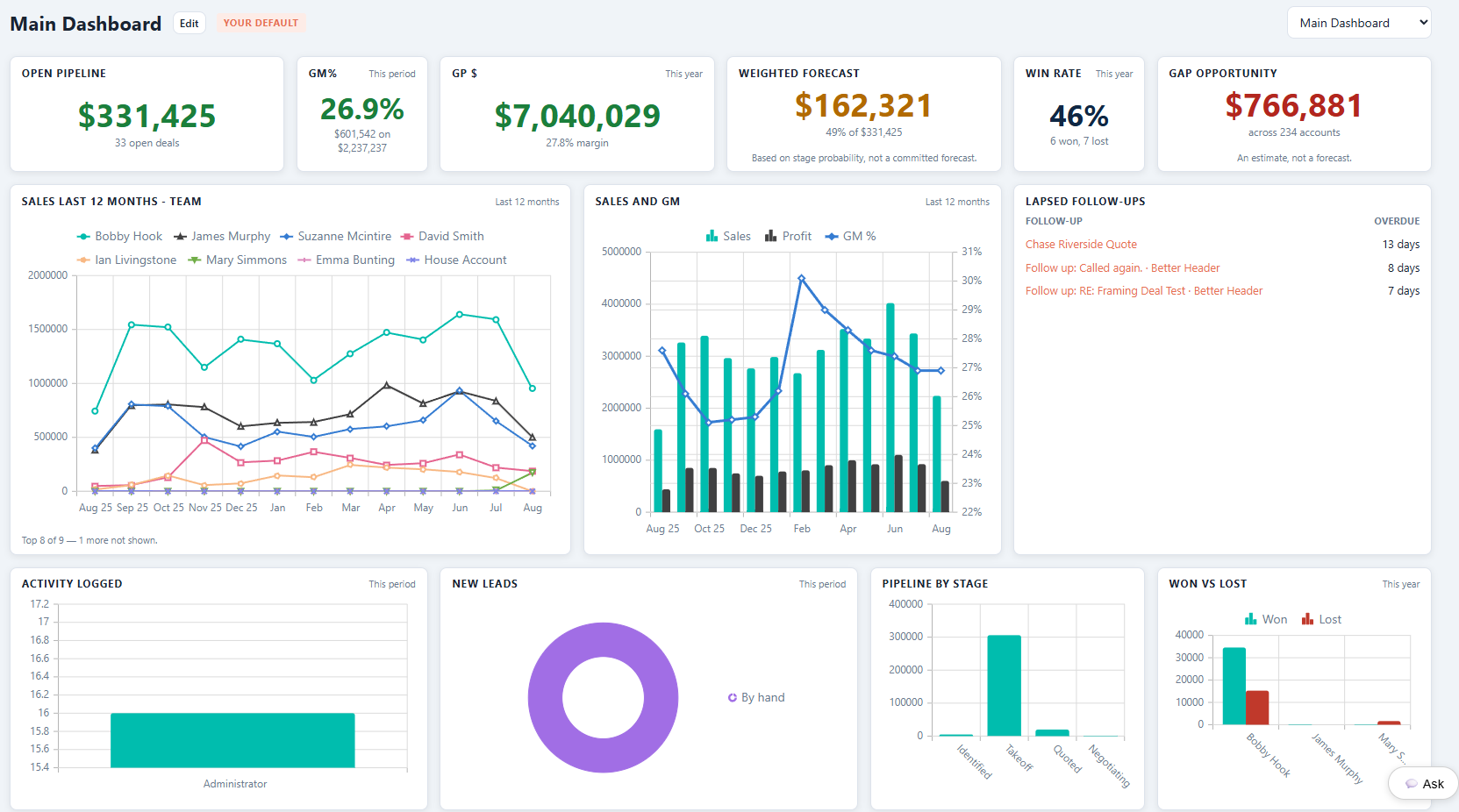
Dashboards each rep can actually use.
Open pipeline, weighted forecast, win rate, quotes expiring, gone-quiet accounts, gap opportunity, sales against last year, cost and margin — as big numbers, charts or tables, sized and arranged how you like, and every one of them clickable through to the records behind it.
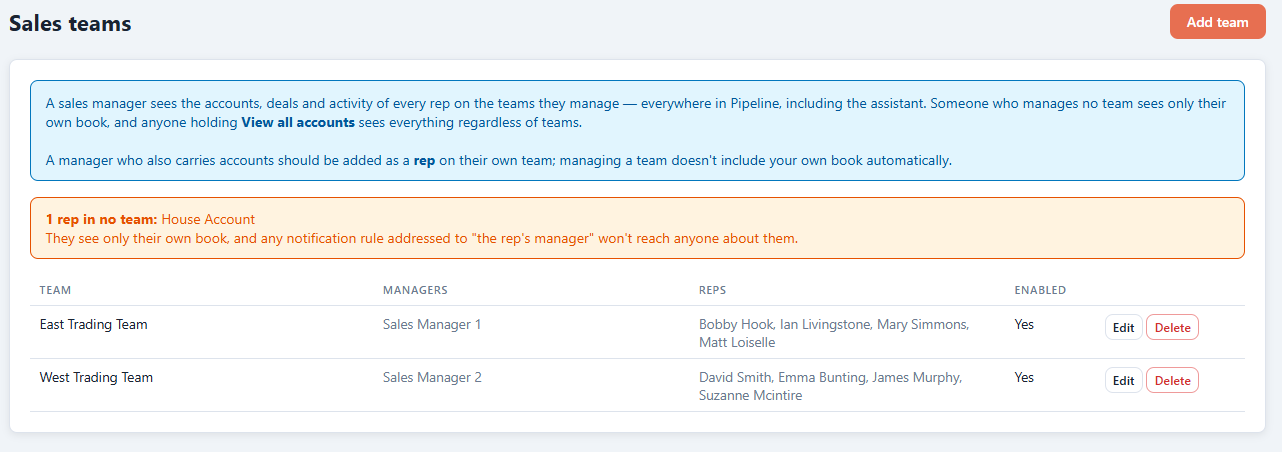
Managers can split any of them by rep, branch or sales area. Publish a board as the template everyone gets, or let reps build their own — that choice is itself a permission.
A sales assistant that never invents a number.
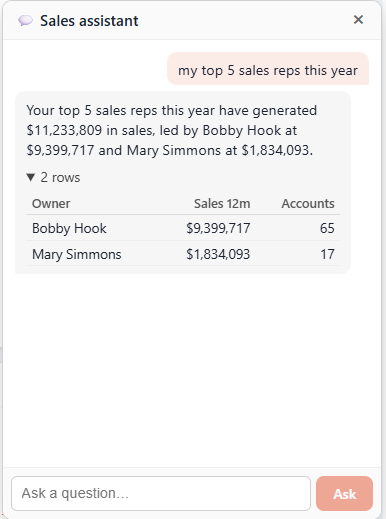
"How much lumber did my biggest account buy this year." "Compare my reps on win rate." The assistant picks the same query the dashboard would run, inside your own visibility, and narrates what came back — it never writes its own SQL and never re-derives a figure.
Which means it can't show you something the app wouldn't, and it can't disagree with the dashboard sitting next to it.